BLOG
FAICETECH'S 99.99% ACCURACY IN REAL-WORLD CCTV DEPLOYMENTS
Why Lab Results Mean Nothing If They Don't Hold Up on the Street
Why Lab Results Mean Nothing If They Don't Hold Up on the Street
Most facial recognition vendors quote impressive numbers from laboratory tests. A system trained and tested under perfect conditions in a controlled environment sounds compelling. But here's the uncomfortable truth: lab accuracy means almost nothing if your system cannot perform in the real world. The gap between laboratory conditions and actual deployments is enormous. In the lab, you control everything. You have consistent lighting, subjects looking directly at the camera, high-resolution images, and no occlusion. Deploy that same system on a live CCTV network and everything changes. Lighting shifts from moment to moment. Faces appear at odd angles. Camera resolutions vary wildly. Crowds cause partial occlusion. Subjects move quickly, creating motion blur. Weather affects outdoor cameras. These real-world conditions are where most facial recognition systems break down.
Real CCTV deployments face a diverse range of challenges that simply do not exist in laboratory settings. Camera resolution is one obvious factor, but it goes deeper than you might think. Your facility probably uses a mixture of older, lower-resolution cameras alongside newer high-resolution equipment. You might have 2-megapixel cameras watching an entrance alongside 40-megapixel cameras covering a checkout area. Your facial recognition engine needs to work across all of them equally well. That's hard. Then there's the question of light. Indoor retail and office environments suffer from inconsistent and often poor lighting. Some areas are brightly lit, others are shadowy. Outdoor cameras face rapid changes in natural light throughout the day, and they must handle both visible light and infrared conditions at night. Weather adds another layer of complexity. Outdoor domes get condensation on their lenses during temperature changes. Rain distorts images. Snow reflects light unpredictably. Indoor cameras near entrances and loading bays contend with sudden changes in light as doors open. Crowds present their own problem. When multiple faces appear in a single frame, some are partially hidden behind others. A person looking over their shoulder is harder to recognize than someone facing forward. Subjects moving through the camera's field of view create motion blur that destroys fine facial details. Finally, distance matters. A person standing 3 feet from a camera presents a very different facial profile than someone standing 15 feet away. A robust system must handle all these variations without degradation.
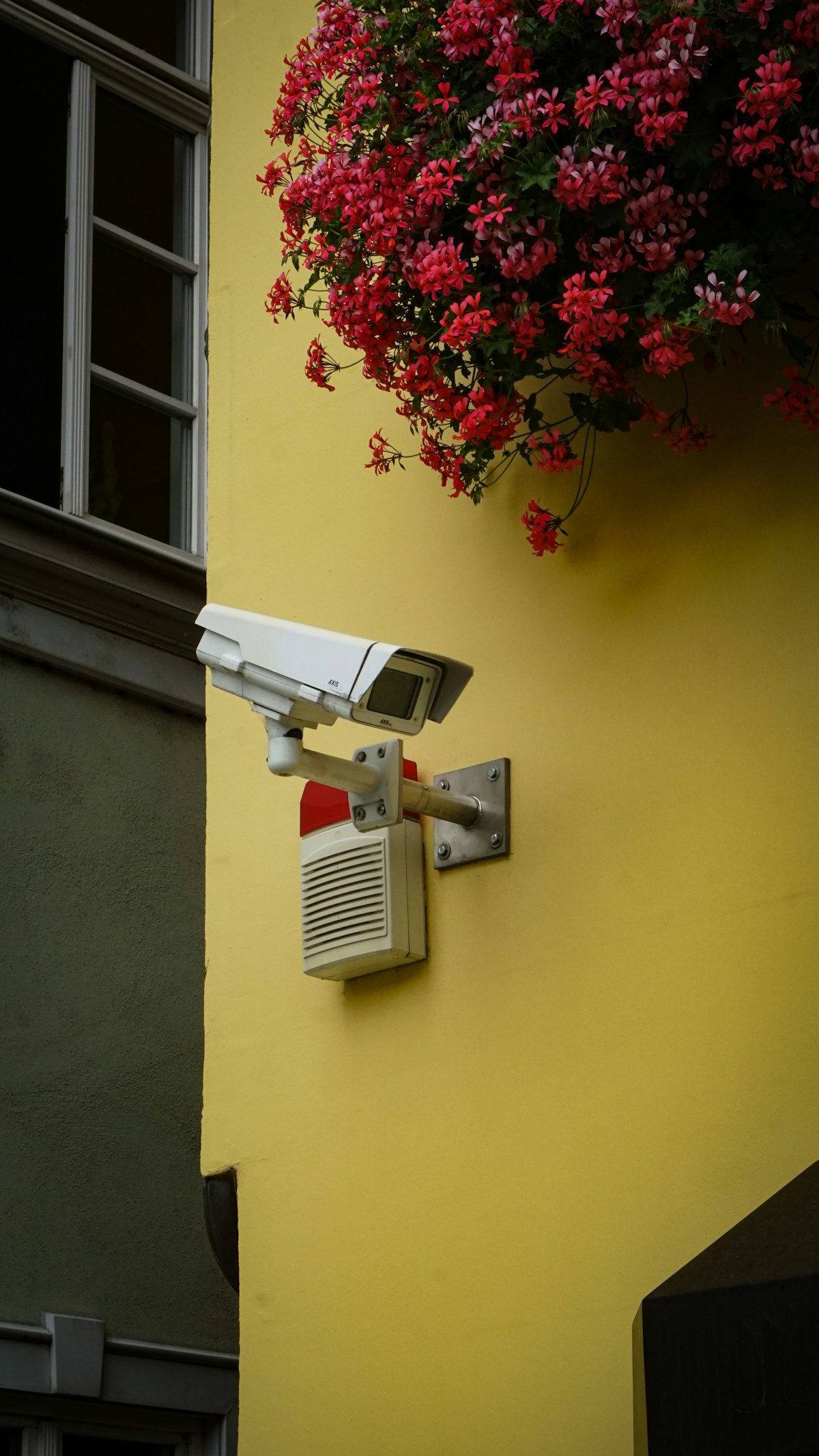
FaiceTech has spent years solving these exact problems. Our facial recognition engine is built on NIST-tested machine learning models that understand real-world conditions. We do not rely on marketing claims. We submit our system to independent testing by the National Institute of Standards and Technology, which publishes objective results for the entire industry to see. That transparency matters. Our system supports adaptive resolution handling across the full spectrum from 2-megapixel to 40-megapixel cameras without requiring any additional configuration or tuning. The same engine works whether your source camera is decades old or brand new. We support both visible light and infrared detection seamlessly, which means your night cameras work just as reliably as your daytime systems. We leverage edge processing on compatible camera systems, particularly Axis and other modern platforms that support edge applications. By running facial recognition directly on the camera itself using ACAP technology, we reduce latency and eliminate the need to stream high volumes of video data across your network. We tune confidence thresholds intelligently to reduce false positives without sacrificing detection sensitivity. A well-calibrated threshold understands that a confidence score of 87 percent on a crowded, poorly-lit face is very different from 87 percent on a clear, well-positioned subject. We also commit to continuous model updates. The world changes. Faces change. Our models update regularly to reflect the reality of modern deployments, not just the laboratory conditions of yesterday.
Numbers can be deceptive without context. So let's make this concrete. A 99.99 percent accuracy rate means that out of 10,000 face comparisons, you expect one false result. Consider a busy retail store conducting 500 face detections and matches per day. At 99.99 percent accuracy, you are looking at one false alert approximately every 20 days. Your team handles it, moves on. Now compare that to an older system with 95 percent accuracy using the same 500 daily detections. That system generates approximately 25 false alerts every single day. Your security team becomes desensitized to alerts. They stop trusting the system. Operational burden explodes. Over the course of a year, that difference is staggering. A 99.99 percent system produces roughly 20 false alerts annually at that volume. A 95 percent system produces roughly 9,000 false alerts annually. The difference is not incremental. It is transformational. Your team actually investigates legitimate alerts instead of drowning in noise.
We submit our systems to independent testing. NIST, the National Institute of Standards and Technology, is a non-partisan U.S. government agency that runs the Facial Recognition Vendor Test, known as FRVT. The FRVT is the gold standard for facial recognition evaluation. It tests systems across a range of real-world conditions with publicly available datasets. The results are published openly. Any vendor can submit. Not all choose to. We do, because we are confident in our technology and we believe transparency matters. When you see FaiceTech results in the NIST FRVT rankings, you are seeing objective, independent validation of our real-world accuracy. You can read the reports yourself. Other vendors' results are there too, if they chose to participate. This openness is how the industry earns trust. You can visit our compliance page to learn more about our NIST submissions and other certifications that matter for your deployment.
Understanding accuracy in principle is one thing. Seeing it perform in your actual environment is another. We encourage you to request a demo. Watch our system work on your facilities' CCTV footage in real time. See how it handles your unique lighting conditions, your specific camera mix, and your real operational challenges. You will quickly understand why real-world accuracy matters far more than laboratory benchmarks. Once you see what 99.99 percent accuracy looks like on the street, you will understand why every other solution falls short.